


Bottle fill level
Value your old wines
as accurately as possible
On the collectible wine market, only a handful of grands crus are genuinely the subject of serious valuations. And even among this elite, buyer interest is never uniform: it all depends on one criterion that connoisseurs look at first, the level of the wine in the bottle.
What the fill level reveals
about storage conditions
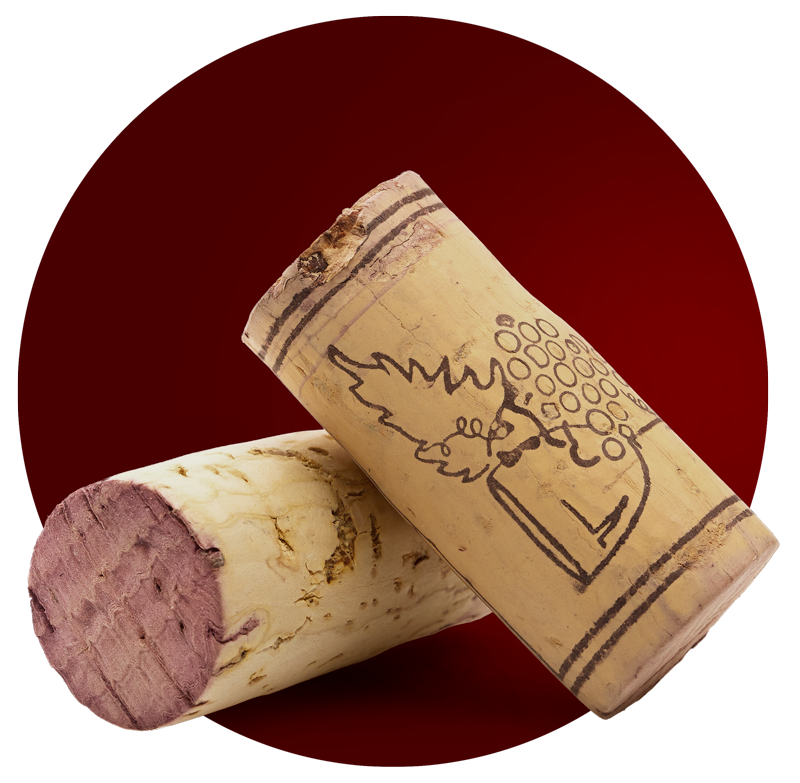
This simple visual guide can make a big difference to the value of a bottle. The logic is simple: a low level indicates greater gas exchange between the inside and outside of the bottle, and therefore a higher risk of oxidation.
These micro-exchanges are a normal part of a wine’s ageing, but they must remain limited: beyond a certain point, they become harmful rather than beneficial.
Assess the fill level of your wines
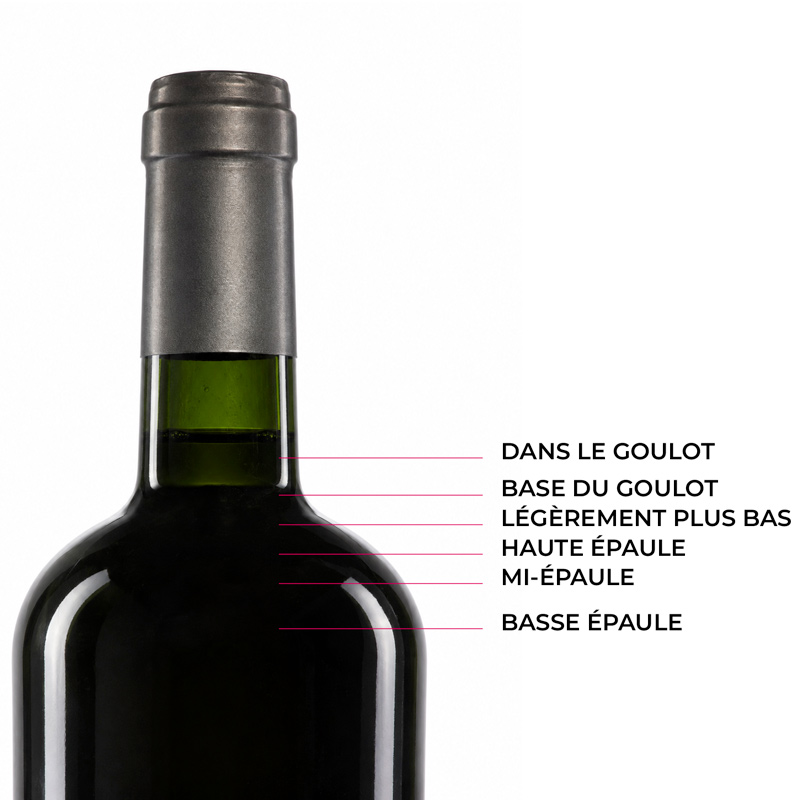
Bordeaux
INTO
THE NECK
Standard for a young wine, remarkable for a bottle aged 15 years or more.
BASE OF THE NECK
A very good level at any age, ideal from 20 years.
VERY TOP
SHOULDER
Satisfactory for a wine aged 20 years and over.
HIGH SHOULDER
Acceptable for a wine aged 30 years or more, remarkable for a pre-1950 vintage - this drop is due to natural evaporation through the cork and capsule.
MID-SHOULDER
A more problematic level, but tolerated for a collector’s bottle aged 40 years or more; often a sign of a weakened cork.
LOW SHOULDER
A very risky level, only of interest for the rarest legendary vintages.
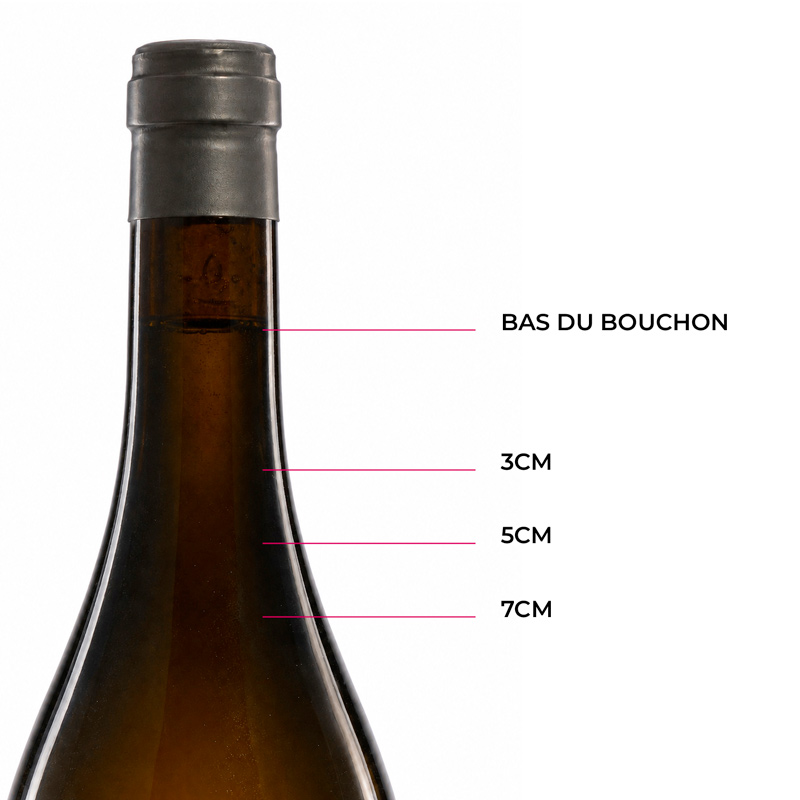
Burgundy
LESS THAN 3CM
A standard level for a young wine, very good for 15 years and over.
3CM
A good level at any age, excellent from 20 years.
5CM
Acceptable from 30 years, very satisfactory from 40 years.
7CM
Tolerable from 40 years, acceptable beyond 50 years - this is the point at which a real risk must be taken into account.
A criterion that remains decisive
for discerning buyers
These guidelines may suggest that a lower level is still acceptable in many cases. Yet the wealthiest collectors remain uncompromising and only look for optimal levels. So only the best-preserved bottles fuel the speculation linked to their rarity. The others still hold real, but more modest, value.